
Last updated November 15, 2026
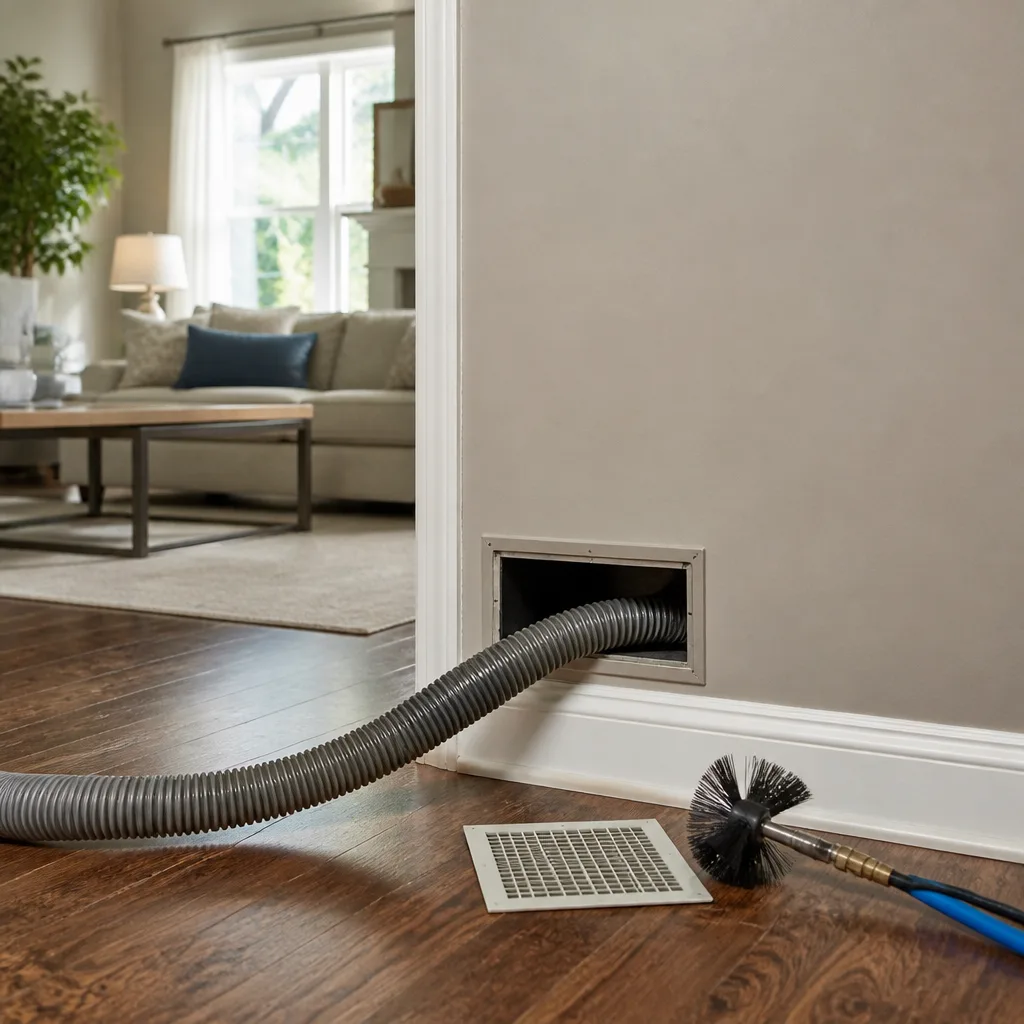 Whole-home duct cleaning
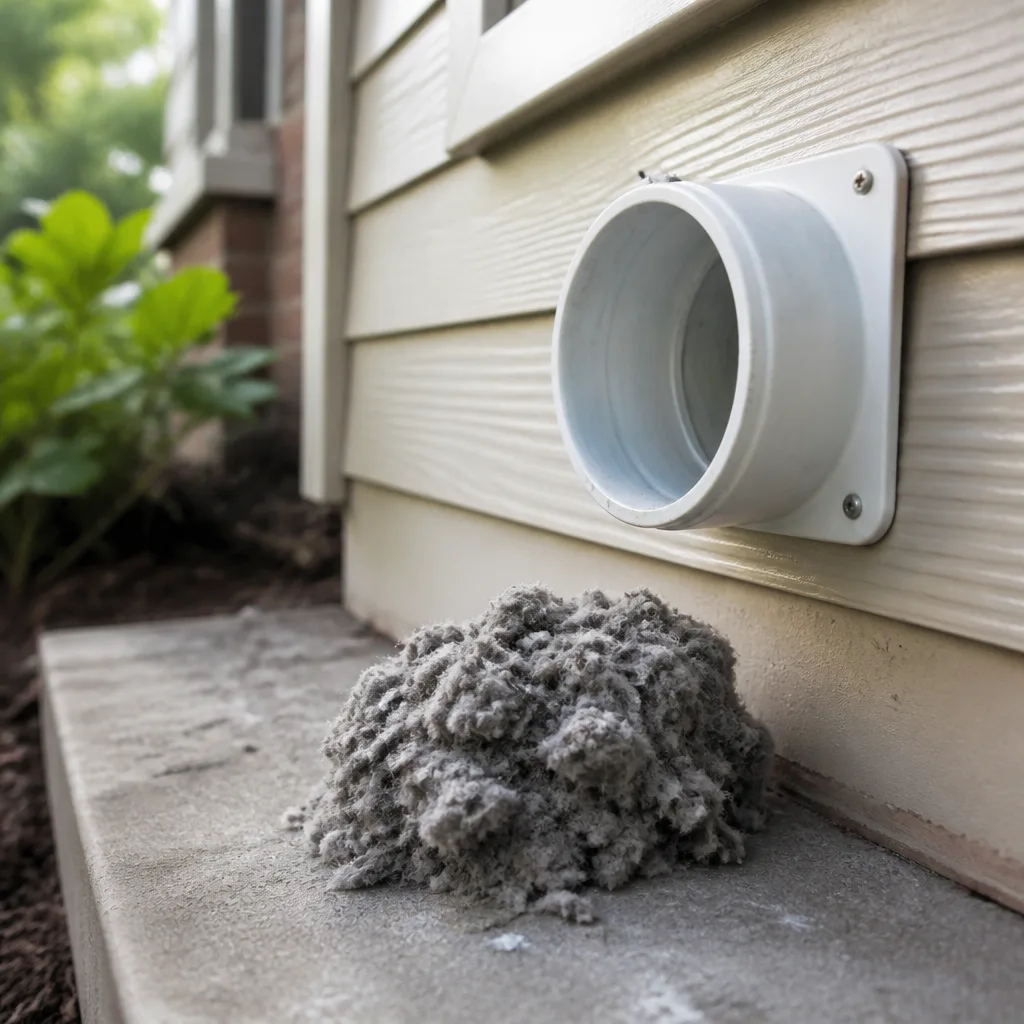 Dryer vent cleaning
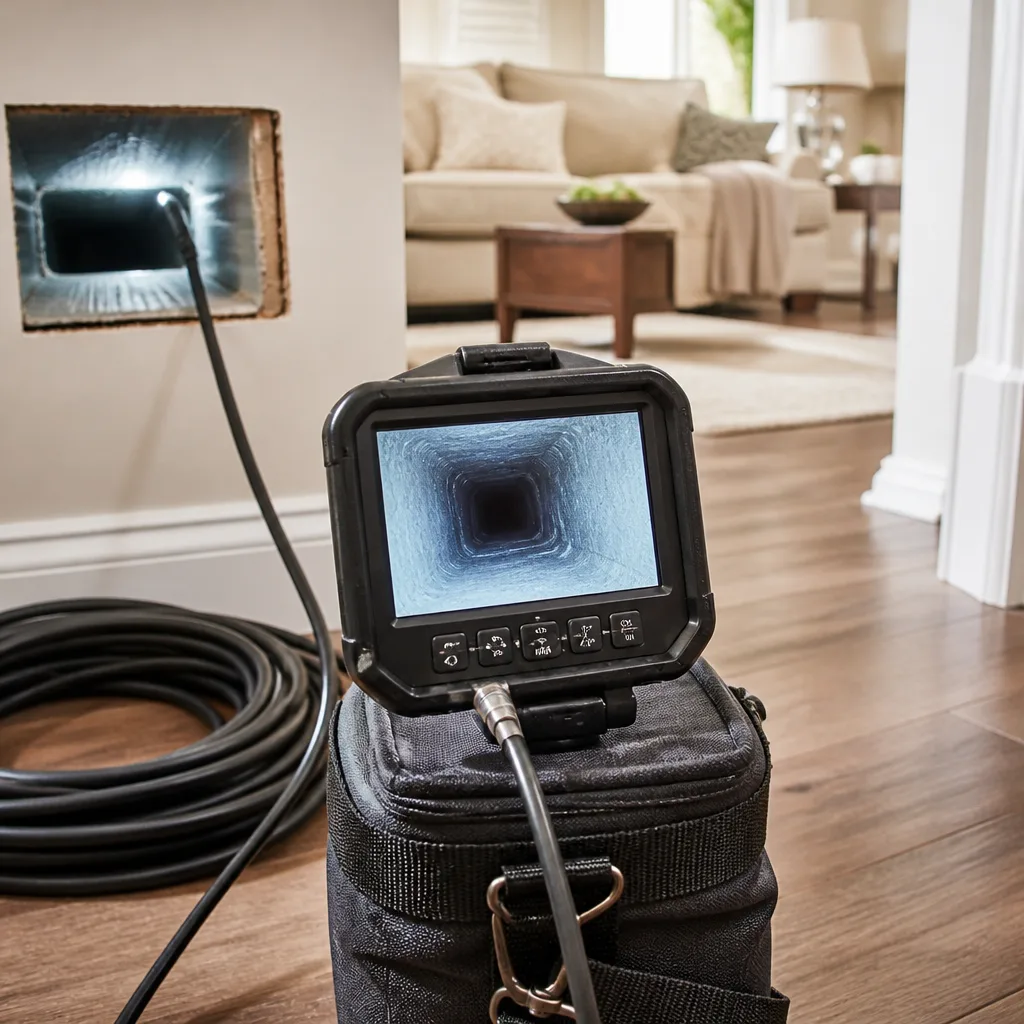 Camera inspection
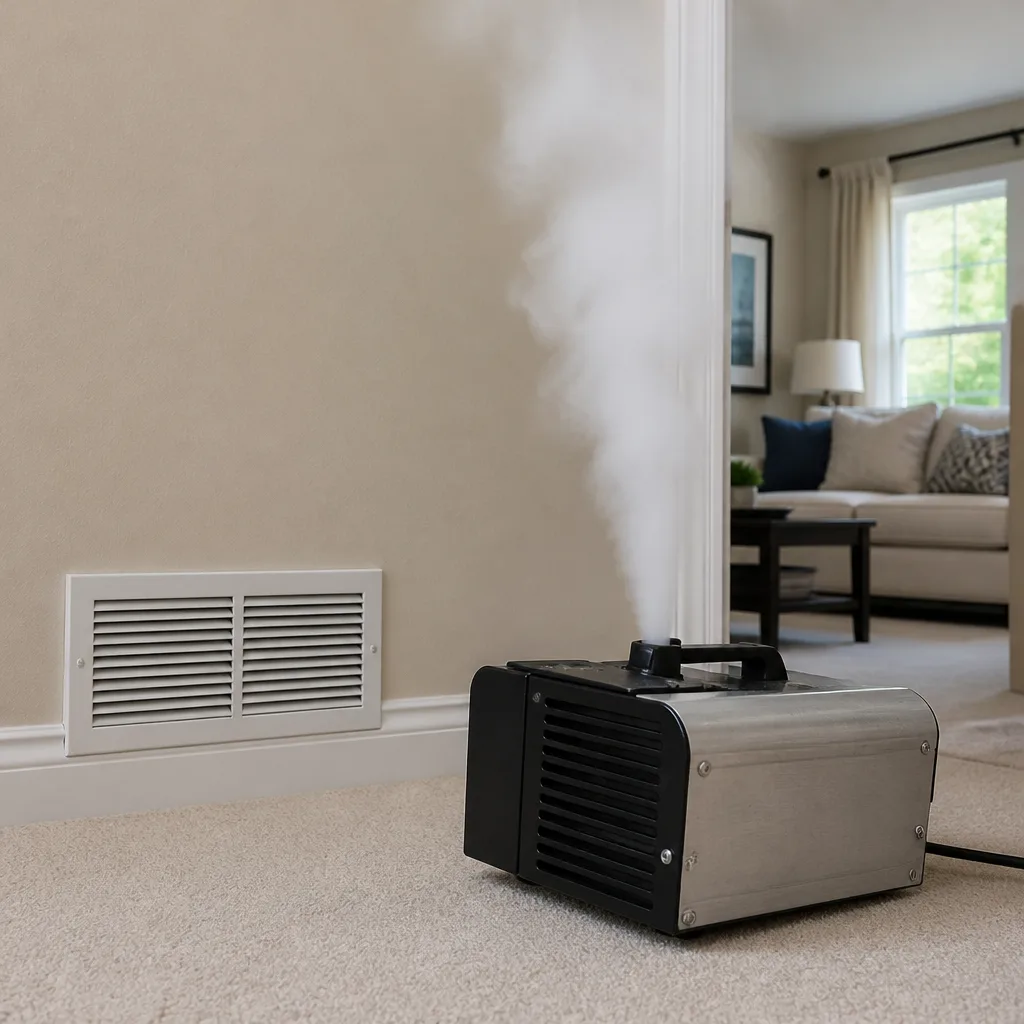 Sanitizing & deodorizing
Whole-system duct and dryer vent check with before-and-after photos - you see exactly what came out of your vents
That "$99 whole-house special" is a bait ad - the real number appears once they are in your hallway, or the "clean" is a shop-vac at the register. We photograph the inside of your ducts before and after instead.
Air Duct Cleaning Maintenance Schedule: What to Do and When
The standard advice says clean your ducts every three to five years. That number comes from a temperate-climate script, and it doesn’t fit a house in Laredo that runs its air handler ten or eleven months out of the year. When your system moves conditioned air almost continuously, particulate matter loads into the ductwork faster than it does in a northern home that sits idle half the year. This guide builds a maintenance calendar around how homes here actually operate: month by month, season by season, and around the trigger events that reset the clock regardless of when you last cleaned. You’ll get a filter and inspection rhythm you can run yourself, a way to judge buildup in accessible duct sections, and a clear line for when to book pros.
Styles & brands we work with
- Whole-home duct cleaning
- Dryer vent cleaning
- Camera inspection
- Sanitizing & deodorizing
Quick Answer
Most Laredo homes should have their ducts professionally cleaned every 2 to 3 years rather than the national 3-to-5-year default, because near-year-round HVAC runtime accelerates dust and particulate buildup. Between professional cleanings, change filters every 30 to 90 days, inspect grilles and accessible duct sections twice a year, and clean the dryer vent once a year or sooner if loads take longer to dry. Any renovation, water event, pest invasion, or new pet restarts the schedule from that date, not from your last cleaning.
Table of Contents
- Why the Standard 3-to-5-Year Rule Doesn’t Fit Laredo
- The Month-by-Month Maintenance Calendar
- Trigger Events That Reset Your Schedule
- How to Inspect Accessible Ducts Yourself
- Crawl Space vs. Slab Foundation: Different Schedules
- The Dryer Vent Schedule Nobody Follows
- What a Professional Cleaning Actually Involves
- Common Mistakes to Avoid
- When to Call a Professional
- Frequently Asked Questions
- The Bottom Line
Why the Standard 3-to-5-Year Rule Doesn’t Fit Laredo
The three-to-five-year interval that appears on almost every duct cleaning website was developed for temperate climates with distinct heating and cooling seasons. In those markets, a furnace runs hard for a few months and an air conditioner runs hard for a few months, then the system sits largely dormant. The dust that settles in the ducts during the off-season never gets pulled through a running system because the system isn’t running.
Laredo is not that climate. Our cooling season stretches from roughly March through November, and many homes run the air handler on fan-only mode even longer to keep air moving. That’s ten to eleven months of continuous airflow through the same ductwork. Every hour the blower runs, it pulls airborne particulate through the return grilles and deposits a fraction of it on the interior surfaces of the ducts.
The math is simple: more runtime means more accumulation. A home in a cooler market might rack up 1,500 blower hours in a year. A Laredo home running AC nearly year-round can double that. If the national average of three to five years assumes a certain cumulative runtime, then a home with double the runtime should be cleaned in roughly half the calendar time. That points to two to three years as a working interval for most houses here.
And it’s not just runtime. Laredo’s dust load is higher than the national baseline. Caliche dust, construction activity, and the fine particulate that rides in on dry south winds all stress the filtration system. Add in the humidity swings during our brief winter and the shoulder seasons, and you have a set of conditions that any generic duct cleaning guide written for Ohio or Oregon simply doesn’t address. If you want a baseline on the service itself, our air duct cleaning page covers what the process involves. This guide is about timing.
A note on indoor humidity
Laredo’s humidity isn’t constant, and that variation matters. When indoor humidity rises above roughly 60 percent (common during the rainy stretches in late summer and early fall), dust in the ducts can clump and adhere to surfaces rather than blowing through. Once it adheres, ordinary airflow won’t move it. That’s when you start to notice musty odors when the system kicks on. When indoor humidity drops and the air gets dry, that same accumulated dust becomes airborne more easily and shows up as extra dust settling on furniture a day or two after you dust.
Either signal is a reason to check your ductwork, not to assume it’s fine because you cleaned it two years ago.
The Month-by-Month Maintenance Calendar
Here’s the maintenance rhythm we recommend for most Laredo homes. The HVAC runtime pattern shapes the calendar: the heaviest particulate load hits during the peak cooling months, so your inspection cycle should be front-loaded into the spring, and your heavy cleaning should land in the shoulder season when the system gets a break.
- January: Change the filter. Inspect the return grilles for visible dust matting. Listen for airflow noise that wasn’t there last year. This is the lightest-runtime month, so a filter change here resets you well for the cooling season ahead.
- February: Check the dryer vent hose behind the dryer for kinks or crushing. Vacuum the lint that has accumulated around the dryer’s base. If you have pets, pull the return grille nearest the pet’s sleeping area and shine a flashlight inside.
- March: Change the filter. Walk the house and open every supply and return grille cover. Look for dust streaks around the grille edges. Take photographs of any accessible duct interior you can see through the grille opening; you’ll compare these later.
- April: This is the ideal month to book professional cleaning. Peak runtime hasn’t fully arrived, so you’re resetting to clean ducts right before the heaviest load season.
- May through August: Change the filter every 30 to 45 days. This is the peak-runtime window. Check the condensate drain pan for standing water (if your air handler has one accessible), and sniff the return grille nearest the air handler for musty odors.
- September: Change the filter. Inspect the dryer vent one more time before the heavier laundry months of fall and winter. Check for any new dust streaks at the grilles.
- October: Pull one return grille and compare the interior to your March photos. If the dust layer has visibly deepened or turned darker, you’re ahead of schedule for a professional cleaning.
- November: Change the filter. Shut down the system for a few hours and inspect the accessible trunk line if you can reach it safely (see the self-inspection section below).
- December: Change the filter. Annual dryer vent cleaning, if it hasn’t been done yet in the year.
Filter change frequency, adjusted for Laredo conditions
The generic “every 90 days” rule assumes a temperate climate and a clean outdoor environment. In Laredo, with higher ambient dust and near-continuous runtime, that interval is too generous for most homes. Practical guidance:
- No pets, no allergies, no construction nearby: change every 60 to 90 days.
- One pet or one allergy sufferer in the house: change every 45 to 60 days.
- Multiple pets, allergy sufferers, or active dust sources: change every 30 days.
- During renovation or a nearby construction project: change every two to three weeks until the dust settles.
Whatever MERV rating you use, don’t buy the highest rating you can find and assume it means cleaner air. A filter that strains the blower and gets bypassed at the frame edges is worse than a mid-range filter that seals properly. Match the filter to the system and to your actual dust load.
Trigger Events That Reset Your Schedule
Calendar maintenance assumes everything stays stable. Real life doesn’t. These events restart the clock regardless of how recently the ducts were cleaned, because each one introduces a new load of particulate, moisture, or organic material into the system that wouldn’t be there otherwise.
1. Renovation, remodeling, or new construction nearby
Drywall dust is the worst offender in the duct cleaning world. It’s fine, it’s alkaline, and it binds to duct surfaces and to fan blades. Any drywall work, flooring replacement, cabinet installation, or painting project inside the home will push construction dust into the return grilles and into the supply ducts through the air handler. If you’re renovating, cover the return grilles with filter media during the work, keep the system blower off whenever possible during the dustiest phases, and book professional cleaning within 60 days of the work finishing.
2. Water intrusion or flooding
If any part of your home has taken on water (a burst pipe, an overflowing appliance, a roof leak that reached interior walls, or a plumbing backup), the ducts can draw moisture-laden air through the system. Wet organic dust in a duct is a substrate for mold. If you can smell damp earth or a musty odor coming from the returns after a water event, treat a professional cleaning as urgent rather than waiting for the calendar.
3. Pest activity
Rodents, insects, and small reptiles occasionally find their way into ductwork, especially at exterior connections and in older construction. Droppings and nesting material are a clear reason to clean, and in some cases the ducts may also need repair where pests have chewed through flex duct or insulation. Duct Cleaning Laredo handles air duct repair as a core service, so if the cleaning reveals chewed flexible duct or compromised insulation, we can address it without handing you off to a second contractor.
4. New pet or an increase in household pets
Pet dander carries a different particle size than ordinary household dust, and it coats duct surfaces in a way that ordinary dust doesn’t. Adding a pet to the household, or going from one pet to two, resets your interval by roughly 25 to 30 percent. A home that was on a three-year cycle drops to a two-year cycle. Add a second pet and you’re looking at 18 months.
5. Illness or allergy diagnosis in the household
When someone in the house is diagnosed with asthma, environmental allergies, or a respiratory condition, it’s worth a professional evaluation of your ductwork rather than assuming the ducts are fine because you cleaned them two years ago. The goal is to reduce the indoor allergen load, and clean ducts with properly sealed grilles are part of that picture.
6. Switching from a long-vacant home to an occupied one
A home that sat vacant for a season or more accumulates dust in the ducts that never gets cycled through because the system wasn’t running. When you move in and switch the system on for the first time, that accumulated dust distributes through the whole house. Clean the ducts before you turn the system on, not after.
How to Inspect Accessible Ducts Yourself
You don’t need to call a technician every time you want to know whether your ducts need attention. Some inspections are safe and useful to do yourself, and knowing what to look for will make the decision easier when it’s time to book. Safety note: never open ductwork that’s connected to a running air handler, never reach into a duct you can’t see clearly, and don’t attempt to remove or re-seat a duct component if you’re not sure how it goes back. The most useful inspections happen without disturbing anything.
- Check the grilles first. Remove the supply or return grille cover (they’re usually held on by two screws). Shine a flashlight into the duct opening at an angle so the beam rakes across the surface. A thin uniform dust film is normal and not a reason to call anyone. A visible textured layer that obscures the interior finish, or that shows finger-track marks, is a sign of buildup.
- Photograph and compare. Take a photo with the flashlight in the same position each season. Interior dust layers build slowly; comparing photos from spring and fall will tell you whether you’re on a two-year or four-year schedule.
- Check the return plenum. If your air handler is accessible and the return plenum has a removable panel (some do, some don’t), look for dust accumulation on the inside of the plenum walls and around the evaporator coil. A very dusty plenum almost always means the ducts need attention too.
- Watch the supply grilles when the system starts. A puff of visible dust when the blower comes on is normal at startup. A sustained visible dust cloud that persists several seconds is not, and it usually points to accumulated dust in the supply trunk that is getting stirred up.
- Check the accessible flexible duct connections. If you can see flexible duct (usually in an attic or crawl space access area), look for kinks, crushed runs, or disconnected sections. These are repair items, not cleaning items, and they need professional attention. Never crawl through an attic or crawl space without understanding the structural and safety conditions.
- Smell check. Run the fan for a few minutes on a cool morning with the windows closed. If you smell a musty or stale odor coming from the supply grilles, the source is usually inside the duct or the air handler. That’s a call-a-professional signal regardless of your calendar.
What “normal dust” looks like
A light, even, gray-brown film that wipes off with a swipe is normal. What’s not: dark clumps, fibrous strands (usually pet hair), anything with color variation suggesting mold, or a dust layer so thick you can press a fingerprint into it. When in doubt, a professional inspection with a camera can answer the question definitively. If you want a broader look at how clean ducts relate to indoor air quality, see our pillar guide at Duct Cleaning Laredo.
Crawl Space vs. Slab Foundation: Different Schedules
Laredo has both slab-foundation homes (common in newer subdivisions) and pier-and-beam or crawl-space homes (common in older neighborhoods). The foundation type changes the moisture infiltration path into the ductwork, and that changes the recommended cleaning interval.
Slab foundation homes
In slab homes, the ductwork typically runs under the slab or through the attic. Slab ductwork in South Texas is grounded, meaning it’s in contact with the earth, and any moisture that migrates upward from the soil can enter the duct system if the slab penetration seals degrade. Additionally, the temperature difference between a slab duct and the surrounding concrete can create condensation in high-humidity months.
For slab homes, we recommend a professional inspection every two years even if you’re only cleaned on a three-year cycle, because the inspection is where early seal failures get caught. The cleaning interval itself is often two to three years for a well-sealed system and 18 to 24 months if the home has had any moisture event.
Crawl space and pier-and-beam homes
In older Laredo homes with pier-and-beam construction, the ducts run through a crawl space or under the floor. Crawl spaces are the entry point for a different moisture profile: ground moisture, plumbing leaks, and the occasional rodent. The flexible duct and rigid duct that runs through a crawl space picks up dust from the crawl space itself if there’s any leak at a joint or seam.
For crawl-space homes, we recommend cleaning every two years and inspecting the crawl-space duct runs every six months (from the access hatch, using a flashlight, without crawling in). If the crawl space has visible moisture or you’ve noticed a persistent musty smell in the house, the crawl space itself may need attention before the ducts get cleaned.
What both share
Either foundation type benefits from having the return side of the system sealed and the filter location designed properly. A return that pulls air from a dusty garage or from a crawl space is a shortcut around your filtration. If the return ductwork is routed through an unconditioned space, that’s a candidate for sealing before or during a cleaning.
The Dryer Vent Schedule Nobody Follows
Duct cleaning gets the attention, but the dryer vent is where the calendar actually matters most. The National Fire Protection Association has documented that clogged dryer vents are a leading cause of residential structure fires, with thousands of incidents reported annually. The primary fuel is lint, and the schedule for clearing it is far tighter than the duct cleaning schedule.
Recommended dryer vent schedule
- Every load: clear the lint trap.
- Every three months: check the exterior vent flap for full opening and clean the lint that collects behind the flap.
- Once a year: professional dryer vent cleaning for a household doing fewer than four loads a week.
- Every six to nine months: professional cleaning for a household doing four or more loads a week, or any household with a long or complex vent run.
Warning signs the dryer vent is overdue
Clothes taking two cycles to dry, a dryer that feels hot to the touch on the top or sides, a burn smell, or visible lint accumulation behind the dryer – any one of these is a reason to call before the schedule. Routine dryer vent cleaning is what we treat as a primary safety service rather than a nice-to-have. If your vent run includes multiple elbows or a long horizontal section, it needs more frequent attention than the baseline.
What a Professional Cleaning Actually Involves
A proper duct cleaning is a process, not a hose-and-vacuum pass. Here’s what a professional job should look like, so you know what to ask for when you book:
- Full system inspection first. Before any cleaning starts, the technician should walk the system: return registers, supply registers, air handler, accessible duct runs, and the outdoor intake. A camera inspection into a few duct runs is standard.
- Source-of-dust discussion. A duct cleaner who doesn’t ask about pets, recent renovations, water events, and HVAC runtime is skipping the part that tells them what to clean for.
- Containment with HEPA equipment. Cleaning a duct system without proper negative-pressure filtration just redistributes dust through the house. We use Abatement Technologies air filtration equipment, the same category of gear used in professional remediation work, to maintain containment and HEPA-filter the return air during the cleaning.
- Contact cleaning of interior surfaces. Rotobrush contact cleaning systems engage the interior surface of the duct, not just the free air. This is what separates professional cleaning from a shop vac pass. Nikro HEPA vacuum equipment collects what the brush dislodges.
- Grille and register cleaning. Registers come off, get cleaned, and go back on. Air handler cabinet and coil surfaces should be cleaned as far as the design allows.
- Airflow verification. A blower-door or airflow measurement at a few registers before and after confirms the cleaning accomplished something measurable.
- Optional air quality upgrade. If the system has a whole-home filtration or humidification component, that’s the point where we can discuss an upgrade. We work with Honeywell and Aprilaire air quality systems, which means an upgrade can be planned into the same visit.
What a proper job costs: for a typical Laredo single-family home, professional duct cleaning runs roughly $350 to $700 depending on system size, number of registers, and accessibility. A combined duct and dryer vent cleaning typically falls in the $450 to $850 range. Repairs, if the cleaning reveals damaged flexible duct or a disconnected run, are quoted separately after inspection. Every price we give is per job by written estimate, agreed before work starts, with before-and-after photos of your own ducts as part of the record.
Common Mistakes to Avoid
- Trusting a national average over your own runtime. The three-to-five-year interval was written for a temperate climate. A Laredo home that runs AC ten or eleven months out of the year is on a different clock, and every duct cleaning website that quotes the national number is quoting the wrong number for you.
- Changing the filter on the package’s schedule instead of your home’s schedule. The “every 90 days” printed on the filter box assumes a moderate climate. During Laredo’s peak dust months, your home may need a change every 30 to 45 days. The box is a starting point, not a commitment.
- Treating dryer vent cleaning as optional. Lint accumulation in a dryer vent is a documented fire risk, and the schedule is tighter than the duct schedule. A dryer that takes two cycles to dry clothes is telling you the vent is loaded, not that the dryer is old.
- Letting a renovation run the system without containment. Drywall dust pulled through a blower and into the duct runs binds to surfaces and resists ordinary cleaning. Cover return grilles during the dusty phases, and book a cleaning afterward whether or not you were “due.”
- Ignoring the musty smell. A musty smell coming from supply grilles means there’s moisture-related buildup somewhere in the system. Sniffing the return after a water event and waiting for the smell to “go away” is how a small moisture issue becomes a mold issue that needs remediation.
- Assuming a shop vac is the same as a professional cleaning. A shop vac has neither the airflow nor the filtration to remove dust from a duct interior, and running one through a return drop stirs up more than it captures. Professional equipment exists for a reason.
- Cleaning the ducts without fixing the source. If your return pulls from a dusty attic or a garage, cleaning the ducts buys you months, not years. Sealing or rerouting the return at the same time turns a two-year schedule into a four-year schedule.
When to Call a Professional
Some situations call for a scheduled cleaning and some call for a call today. Book a cleaning when it’s calendar time, when your accessible-duct inspection revealed textured buildup, or when a trigger event (renovation, water intrusion, pest activity, new pet) has reset the clock. Call sooner if you’re seeing a musty smell from the supply grilles, a visible dust plume that persists on every startup, or a dryer that’s taking two cycles – the first is a moisture signal, the second is a buildup signal, the third is a fire-safety signal. If the ducts need repair (chewed flex, disconnected joints, crushed runs), we handle that as a core service, so the fix happens on the same visit instead of needing a second contractor. Duct Cleaning Laredo offers free estimates in Laredo. Call (844) 938-0644. We answer 24/7. Fast dispatch from 7am to 7pm, Sunday through Friday.
Frequently Asked Questions
Every two to three years for most Laredo homes, versus the national three-to-five-year default. The difference is HVAC runtime: with the system running ten or eleven months a year and higher ambient dust loads than the temperate climates the national average was written for, particulate accumulates faster here. Homes with pets, allergy sufferers, or recent renovation fall to an 18-to-24-month interval. Homes with a crawl space foundation or a duct system that’s had a water event drop to the shorter end of that range. Call (844) 938-0644 for an exact quote. Estimates are free.
No, five years is too long for most Laredo homes. Five years assumes a temperate runtime profile and clean source air. In a house that runs its air handler nearly year-round and pulls through a return in a dusty environment, five years is enough time for the dust layer to become textured and for the evaporator coil to load heavily. That’s an efficiency problem and an air quality problem, not just a cosmetic one. If you haven’t had ducts cleaned in five-plus years, book an inspection now. Call (844) 938-0644 for a free estimate.
Changing the air filter on your home’s real schedule, not the filter box’s printed schedule. In Laredo, that typically means every 30 to 60 days during the peak cooling months and every 60 to 90 days the rest of the year, adjusted up if there are pets or allergy sufferers in the home. A clogged filter doesn’t just reduce airflow: it forces the blower to work harder and lets particulate bypass at the filter frame. Clean filters are the cheapest thing you can do to protect the duct system. Call (844) 938-0644 to schedule professional cleaning when the filter changes stop keeping up.
Once a year for a household doing fewer than four loads a week, and every six to nine months for a heavier-use household or one with a long or complex vent run. Clear the lint trap after every load (non-negotiable) and check the exterior flap monthly. If your dryer takes two cycles to dry clothes, feels hot on top, or shows visible lint behind the machine, call for a cleaning now rather than at the schedule. Dryer vent blockage is a documented fire risk, and it’s the most preventable fire hazard in most homes. Call (844) 938-0644 for a free estimate.
Yes, it changes both the interval and the inspection rhythm. Crawl-space homes in older Laredo neighborhoods draw dust from the crawl space itself if there’s any joint or seam leak, and the moisture profile of a crawl space is different from a slab. We recommend a two-year cleaning interval and a six-month inspection of the accessible crawl-space duct runs (from the access hatch, without crawling in). Slab homes typically run a two-to-three-year cleaning interval with a two-year professional inspection for early seal failures. Either way, keeping the crawl space dry and the return sealed is worth more than any single cleaning. Call (844) 938-0644 for an exact quote.
Yes, when the source of the dust is the ductwork itself, which is the usual case after a renovation, a water event, or a long interval since the last cleaning. Ducts that have accumulated a thick internal dust layer act as a reservoir, releasing a fraction of that dust every time the blower cycles. Cleaning the duct interior removes the reservoir, and the reduction in household dust is measurable within a week or two. If the source of the dust is a return pulling from a dusty attic or garage, cleaning alone won’t solve it: the return needs attention. Call (844) 938-0644 to talk through your situation.
The Bottom Line
The generic three-to-five-year duct cleaning rule was written for a temperate climate. Laredo runs HVAC ten or eleven months out of the year, so the working interval here is two to three years for most homes, less for pets, allergy sufferers, crawl spaces, and any home that’s been through a renovation or water event. Between professional cleanings, change filters every 30 to 90 days based on your own dust load, inspect accessible duct sections twice a year with a flashlight and a camera, and clean the dryer vent annually. Any trigger event (renovation, water, pests, new pet) restarts the calendar. Get the schedule on paper, put the filter changes on the reminder app, and let the rest of the system hold up its end. Duct Cleaning Laredo offers free estimates in Laredo. Call (844) 938-0644. We answer 24/7. Fast dispatch from 7am to 7pm, Sunday through Friday. Our technicians have up to 11 years of experience with the professional-grade equipment (Rotobrush, Nikro, and Abatement Technologies) that separates a real cleaning from a shop vac pass. For Laredo homeowners looking for a broader overview of the duct system and local service, see Laredo.
Written by the team at Duct Cleaning Laredo.
See the difference
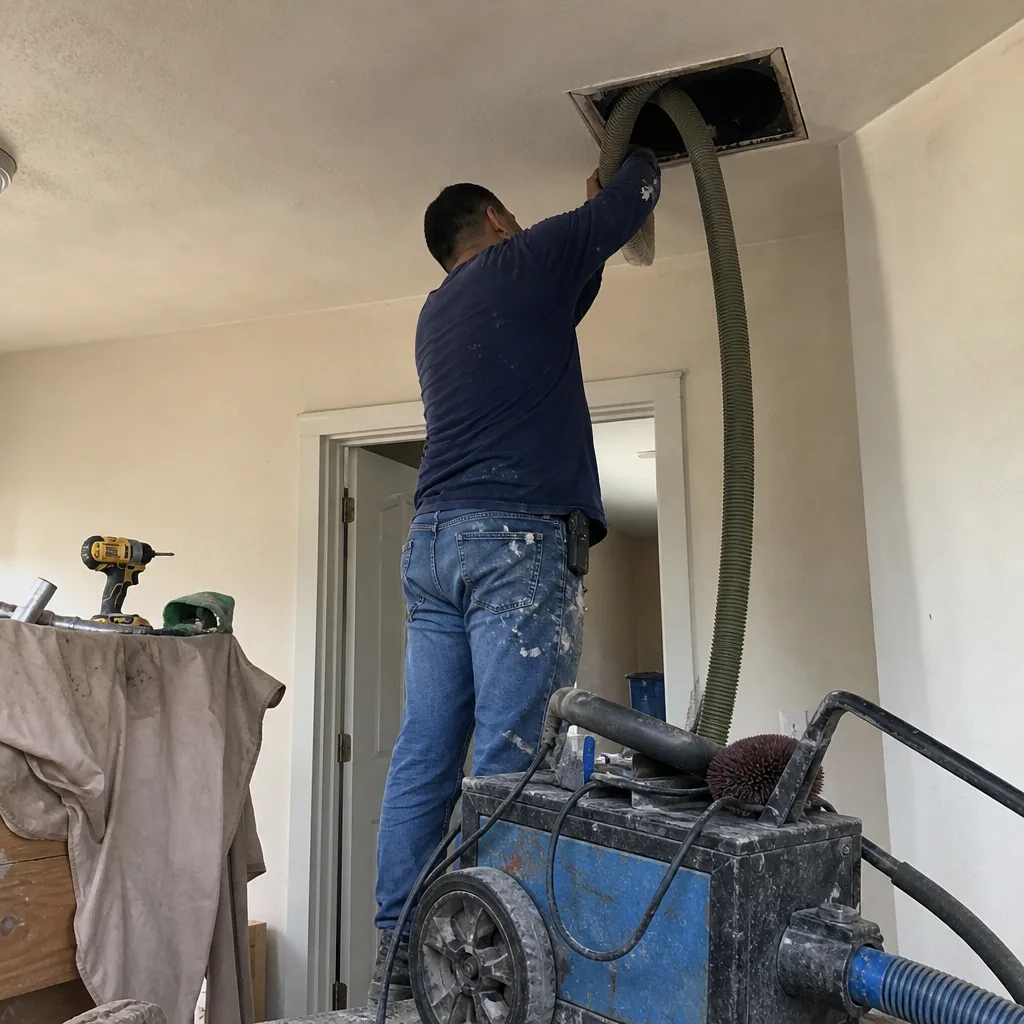 Before
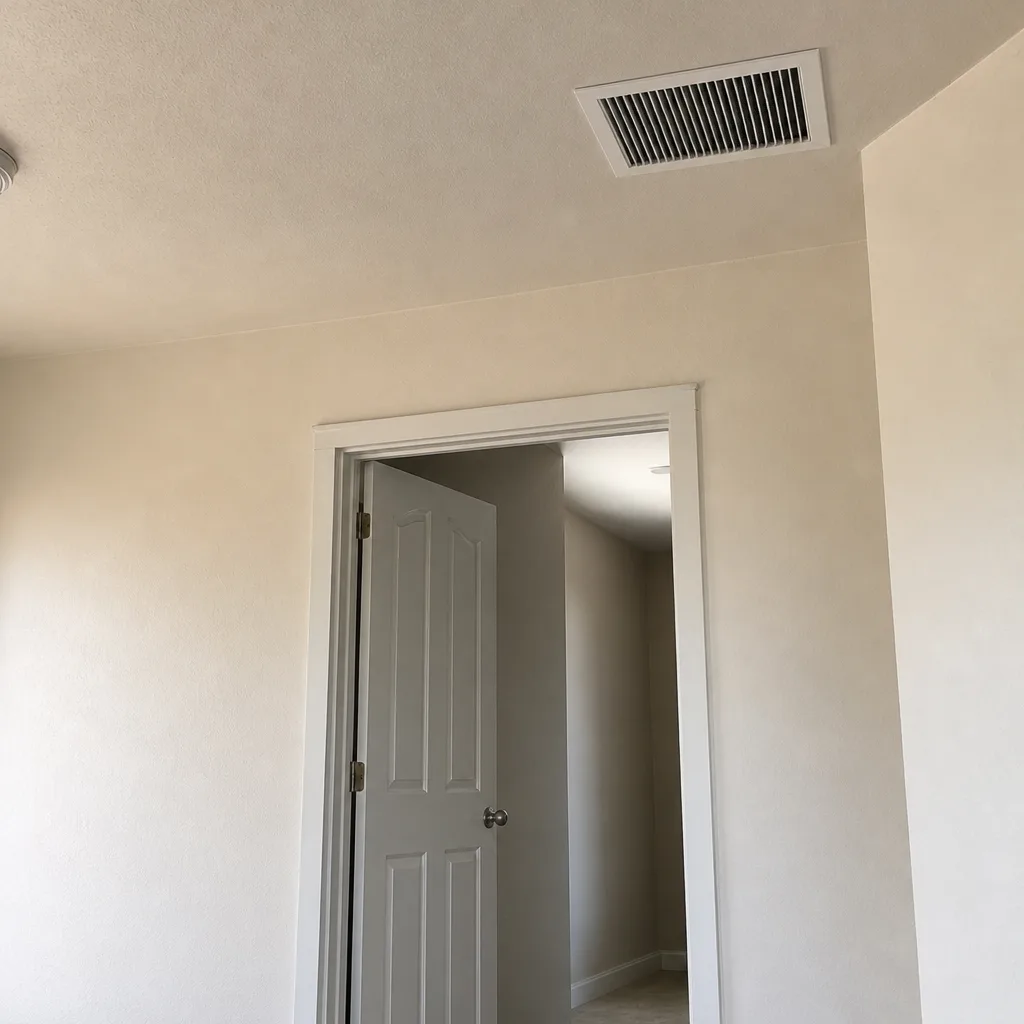 After
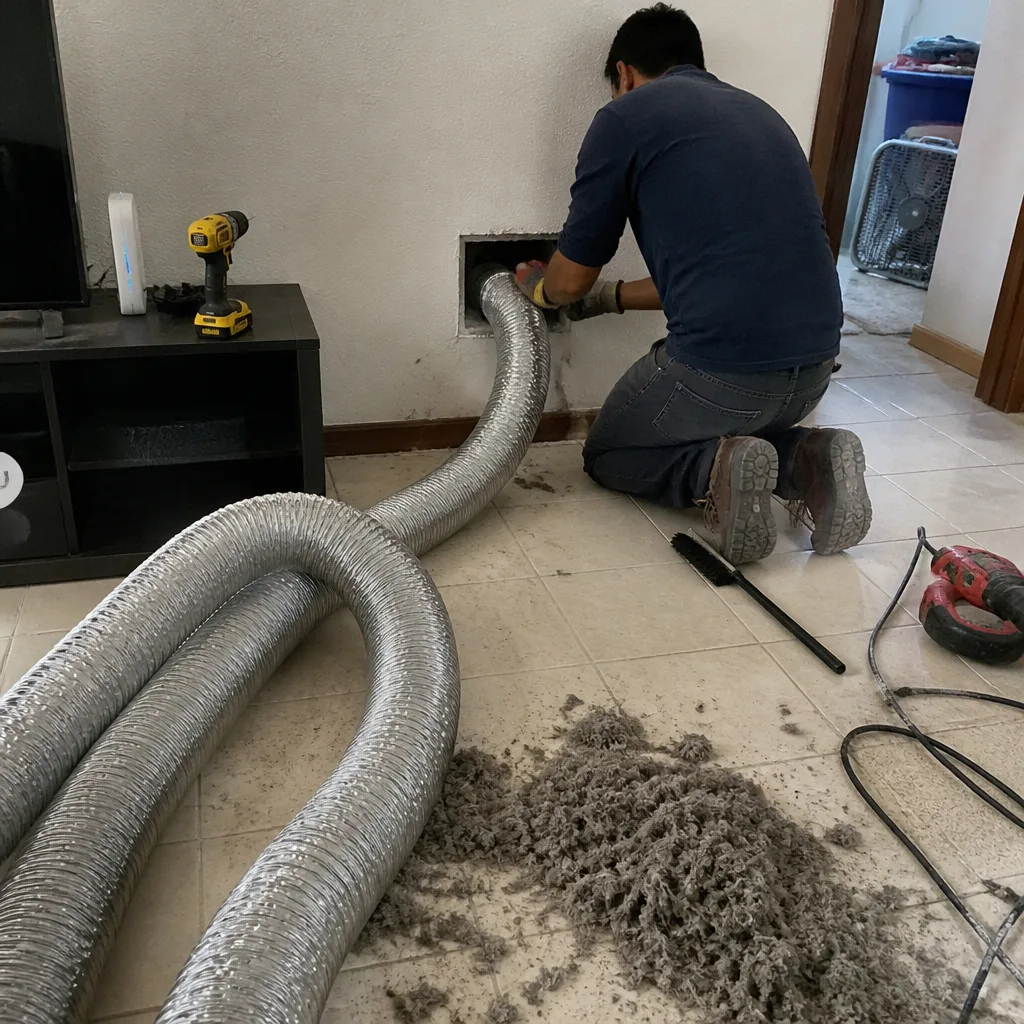 Before
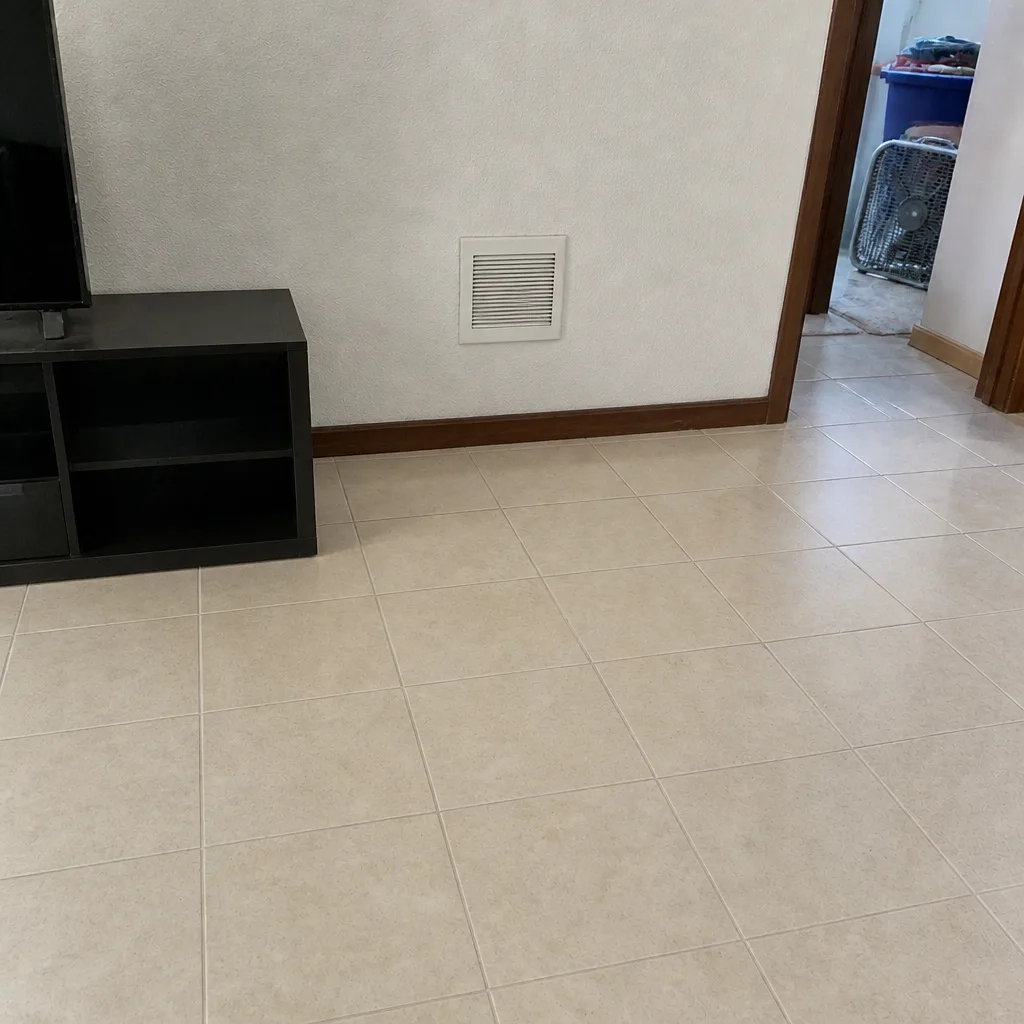 After
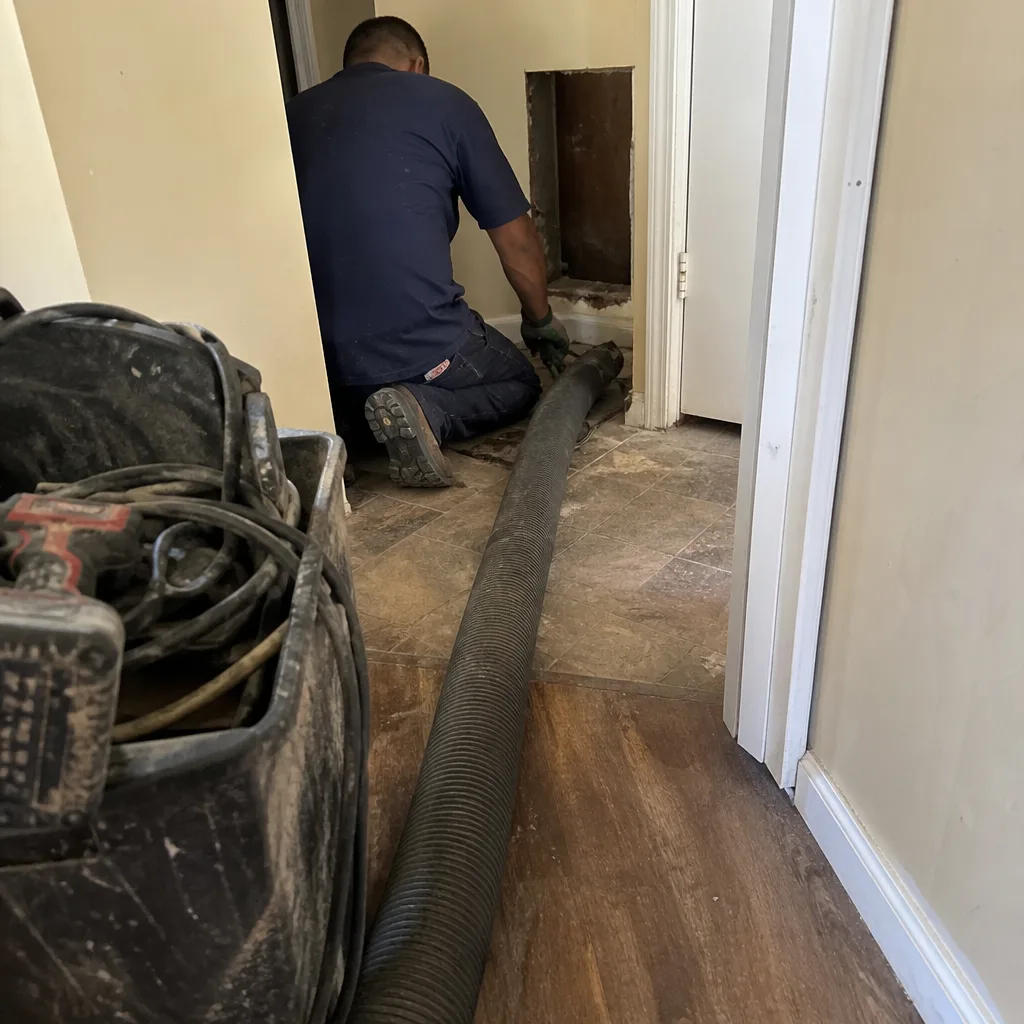 Before
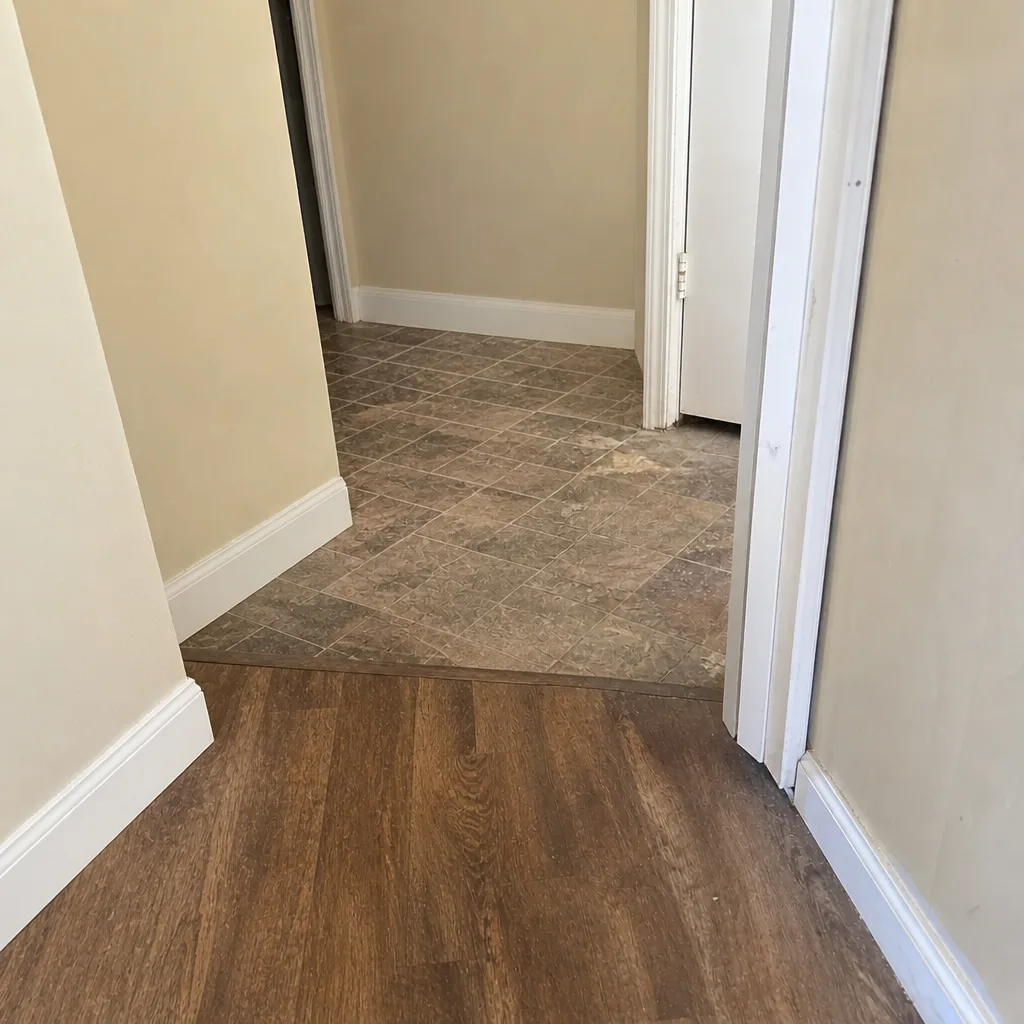 After